


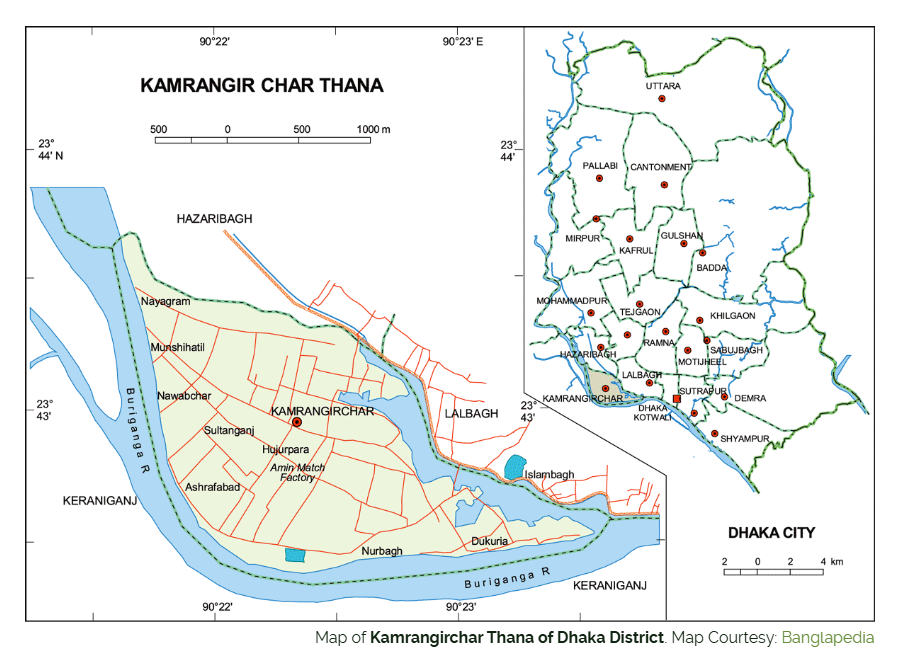
The economic landscape of Kamrangir Char is largely informal. Many residents depend on low-wage jobs, such as rickshaw pulling, laboring in small workshops, and domestic work. A significant number of women have also found employment in newly established garment factories. However, these jobs provide little financial security, making it difficult for families to meet their basic needs. Especially with rising prices, food insecurity becoming critical concerns for them. For those temporarily displaced from areas like Satkhira, the living conditions are dire. They reside in makeshift structures made from bamboo, tarpaulin, and other salvaged materials, offering minimal protection from heavy rain and flooding during the monsoon season. These temporary shelters lack proper sanitation facilities, with only a few toilets shared among 12-15 people, which heightens health risks and the spread of waterborne diseases. Some families live in rented rooms with shared kitchens and common toilets, where poor sanitation continues to be a major concern, particularly for women.
Here children unable to attend school due to financial constraints and a lack of educational infrastructure. Despite some informal schools set up by NGOs, resources remain scarce. The government has recognized the challenges faced by displaced populations and introduced policies, such as the National Strategy on Internal Displacement Management (2021) and the National Action Plan (2022-2042), aiming to provide affordable, disaster-resilient housing and facilitate livelihood opportunities. These initiatives emphasize the need for a collaborative approach between the government and NGOs to improve the living conditions of the displaced and promote inclusive urbanization. However, much remains to be done to address the immediate and long-term needs of the displaced population in Kamrangir Char.Md. Redwanul Islam Chowdhury
Research Associate, RMMRU